All blog posts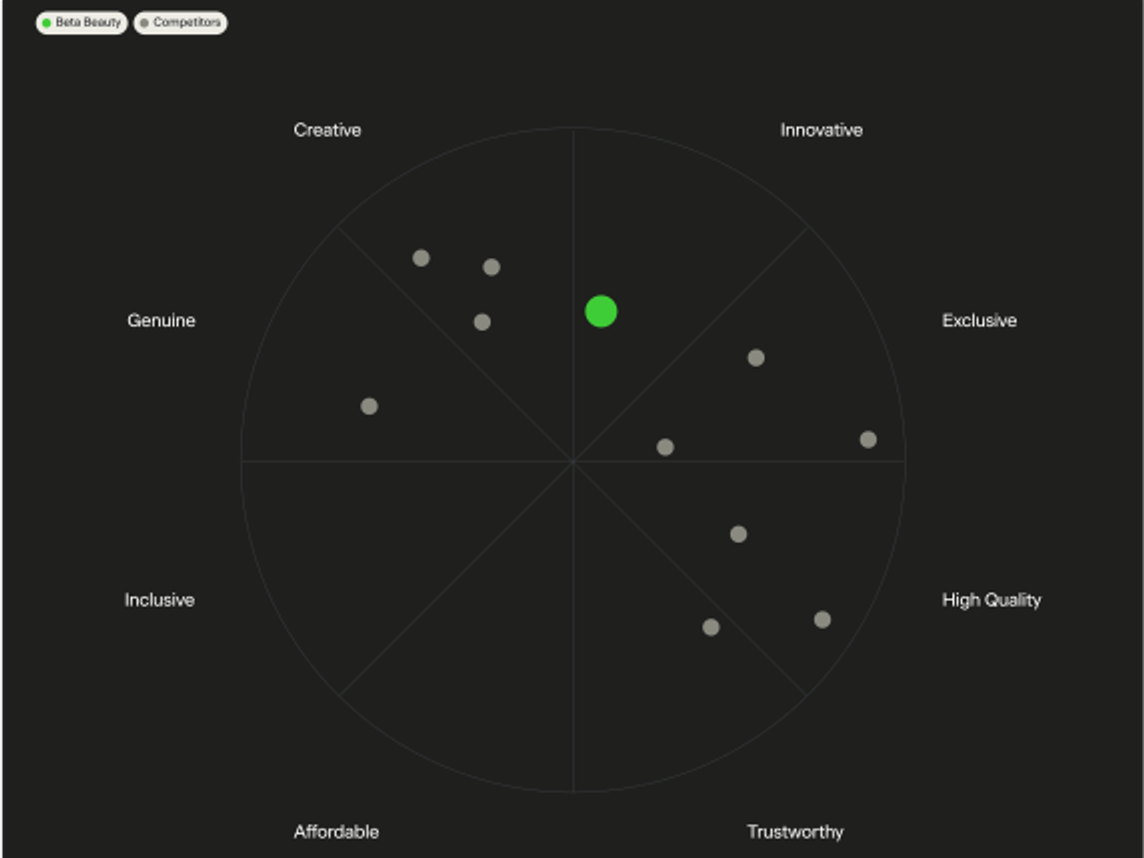
Why brand positioning comes first when building brand equity
Brand equity depends on a distinct position, differentiation from competitors and attention. Why the position comes first, and how all three can be measured in a brand tracker.
· 2 min read
Contents5 sections
A strong position is the starting point for building brand equity. A position on its own is not enough, though. Brand equity also requires that the brand is different from its competitors and that people notice it.
What is brand equity?
Brand equity is the difference between the value of a branded product and the value of the same product without the brand name, as defined by the marketing professor Richard Rosenbaum-Elliott.
We describe brand equity as the positive space a brand holds in people's minds. A brand with high brand equity holds a larger positive space than its competitors.
What is brand positioning?
Brand positioning describes the place a brand holds in the minds of current and potential customers.
To be useful, the position has to be distinct and relevant. Relevant means that it is linked to needs that matter to buyers in the category.
How brand positioning builds brand equity
A position alone does not build brand equity. Three conditions have to be met together:
- A distinct position. The brand stands for something specific that matters to buyers.
- Differentiation. The position differs from the competitors' positions. A strong position that competitors share does not set the brand apart.
- Attention. People see and notice the brand's communication. A position that people do not notice has no effect on brand equity.
Spending more on media does not replace a position. A brand that is louder than its competitors but has no distinct position gets attention without giving people a reason to choose it.
Of the three, the position comes first, because differentiation and attention are only useful once the brand stands for something specific.
Why a distinct position makes marketing more efficient
When communication builds on a clear position, each campaign adds to the same associations, and the effect accumulates over time.
Without a clear position, campaigns compete with each other for meaning, and more spend is needed for the same effect on brand equity.
How to measure positioning, differentiation and attention
A brand tracker can follow all three:
- Positioning. Which associations and needs people link to the brand.
- Differentiation. How those associations compare with competitors' on the same questions.
- Attention. Ad recognition, and how awareness develops after a campaign.
Read together over time, the three show whether a position is building brand equity.
Related product: Odyssey Brand Signal, the brand tracking platform